Showing posts with label miscellaneous games stuff. Show all posts

Friday, June 27, 2008

Storytelling About Video Games

It has occurred to me lately that U.S. Culture has fragmented, and I find value in the notion of having a common one. In the eras before mass entertainment, cultures used folklore as one of the ways to pass its memes on.

Folklore tells us stories that help us define who we are as a people and teach us valuable lessons about life and our relationships to other people.

We find our folklore today in pop culture and mass media. They have such a large volume that everyone has to pick and choose what stories to experience, and so we each end up with a unique culture for every person rather than a solid common base.

Schools used to provide much of this through education in classic litersture and American folk tales, but a focus on multiculturalism (meaning every culture's stories but ours) has largely destroyed what cultural commonality we had.

This leaves us with pop culture, where the massive volume of material creates the fragmentation I referred to earlier.

I think that folk tale renditions of classic literature, plays, movies, television, books, comics, and yes, video games could help provide this common story database to define our American culture. Think of it as a kind of Cliff's Notes for American identity.

I've added to my (already over-long) to-do list making an attempt at composing and publishing under the Creative Commons license some such folk tales. Others are welcome to contribute, as long as they submit the material under CC or some other similarly non-restrictive license.

Sunday, June 15, 2008

Gamer's Diary - Game Trailers Screen Saver

My medicine has made me too fatigued and sick the last few days to enjoy games (beyond the easy trance-like play of Bejeweled 2 in Endless Mode), so I have spent my play time in less demanding pursuits, such as books, TV, and movies. I have also re-watched some of my old Xbox 360 game trailers, and set about adding them to my office screen-saver.

I have a Windows Media screen-saver installed at work, and it plays a Windows Media Player playlist. The playlist I have for it consists of movie trailers, game trailers, and screenshots. Every once in a blue moon I add new items to it.

I used to get the trailers onto PC by using a video capture gadget, until I realized that I could get them faster, easier and with better quality by finding them on the Internet. Two websites - gametrailers.com and gamevideos.com - have been especially helpful in that regard. I download the trailers, then store them on my hard drive and flash drive.

Not Safe For Work trailers I do not take to the office. Any trailer with blood or gore, with too-scantily clad people, or with sexually suggestive visual content, stays on the home PC only. Foul language or sexually suggestive audio I don't worry about, as I set the screen-saver to play without sound.

And yeah, I know this pretty much guarantees I'll never have to turn in either my geek or nerd badges.

Saturday, June 07, 2008

Joysticks Fade Away

(Originally posted on Slashdot)

I think the demise of the joystick tracks the movement of gaming from a niche activity to the mainstream.

Specialized peripherals such as joysticks, driving wheels, trackballs, arcade knobs, and spinners are ideal for the specific game genres that need them, while gamepads (and on the PC, keyboard/mouse) are good enough in every genre while excelling in almost none of them.

The Atari 2600 was the first and last console to use a joystick instead of a gamepad, and that only because the gamepad hadn't been invented yet. If you look at the vast majority of Atari 2600 games, you'll find that they would have worked better with a gamepad.

So for inexpensive mainstream gaming, the default controller was always going to be something like a gamepad.

The PC, on the other hand, started as a niche market; you pretty much had to be a nerd to own one and be capable of operating it, and to game on one made you even more of a nerd. Marketing specialized peripherals to technophiles is easy. Marketing them to people who (as computers became cheaper and easier to use) bought computers for Internet connectivity and word processing and other practical purposes is considerably more difficult.

What's a joystick specialized for? Flight and space sims (including mechs). Some would say fighting games as well, though the preferred peripheral there is actually the arcade knob.

Those of us who enjoy flight sims sometimes have trouble grasping just how unnatural an act flying is for most people. The controls don't do what they would expect, and managing the flight envelope while trying to fight is just too alien.

And flight sims are complex beasts that require managing a myriad of controls and instruments. This is even true for some space sims - energy management in the X-Wing series is a good example. This begins to pass what most would consider play into the realm of work. Only the true fans will find joy in this kind of activity.

Joysticks have always been a niche market; it's just that PC gaming's earlier days were entirely the same niche market, so joysticks naturally dominated there. Now that gaming (both PC and console) is a more mainstream activity, game producers choose to produce games that target that mainstream, and one of the ways they do that is by making games that work well with the platform's default peripherals. That's why the last three significant PC space sims - Freelancer, Eve Online and Dark Star One - are designed for mouse and keyboard; the first two can't even be played with a joystick.

There is still a place for the joystick - committed flight sim fans will still want one (IL-2 Sturmovik, Pacific Fighters, Lock-On, Microsoft Combat Flight Simulator, and so on), it works well in games that have flying portions (like Battlefield), and games like Ace Combat 5 and 6 offered them as an optional add-on, but that place will remain as a niche peripheral for the forseeable future.

Game Saves Backup Quest - The Betrayal

This is a warning. Some third-party gaming accessories bear misleading, nigh-deceptive, and confusing product packaging. The two I bought recently certainly didn't do what I'd purchased them for, and can't be returned (clamshell packaging and GameStop's return policy).

I've been looking for ways to backup all my game saves to my PC. Experiences with bad media and accidental erasures have motivated me to preserve my saves. Since none of the platform manufacturers (Nintendo, Microsoft, Sony) provide means to do this, the only option is third-party accessories. I've had mixed fortune with them.

The two I just purchased are the ones that did nothing I wanted them for. They are:

  • Action Replay DS
  • GameShark GameBoy Advance SP
Both products are, I'm sure, fine for their intended purpose - using cheat codes to make games easier. However, when it comes to transferring saves to and from a PC, they turned out to be useless.

The DS product I got has a cable to attach to a PC and upload/download, but it doesn't transfer saves. It only transfers cheat codes. The product I needed (I think) was the Action Replay DS Max, since discontinued. So I ordered one from a reseller. It's a minor difference in the product name, but a huge difference in functionality.

Sadly, the product I got from the reseller was the AR DS, not the Max. I returned it three times, and each time got an AR DS as a replacement. Apparently they've put AR DS units where the Max units were supposed to go...maybe they thought no one would notice? I also tried several big box brick-and-mortar retailers and they also had the AR DS on the shelf where the sticker said AR DS Max. So the only way I'll ever get one is an Amazon used products seller or eBay.

The GBA product I got was even worse. On that one I had done some online research, and found in the product's specs a cable, and I'd found uploaded saves on gamefaqs.com labelled with the product's name. When I looked at the product package prior to purchase, on it was a claim that I could "join the online community" and download codes and game saves.

Imagine my surprise when I opened the clamshell packaging and found that the portions of it meant to hold the cable and driver disk were empty.

Only after digging around for a while on the Gameshark website was I able to find a buried FAQ entry that explained that later versions of the same product have had the transfer capability removed, purportedly in order to leave more room on the cheat device for codes. There is apparently no way to tell which version you're getting without opening the package.

Sigh.

I suppose I could have "joined the online community" and downloaded cheats and saves as the product packaging claimed... for all the good that would do me without a transfer cable.

Well, it wouldn't have worked anyway; the transfer cable plugs into the GBA link jack rather than the cheat device, and I have a DS, which does not include a GBA link in its design. That oversight is my own fault for not doing enough research, but it's rendered moot by the fact that the GameShark lacked a cable.

So I'm still looking for a device that will let me transfer GBA saves to and from a PC. The only other thing I've been able to find is one of the devices meant for pirating GBA roms. I'd rather not purchase such a thing, though my intended usage of it is legitimate.

So if you want to make backups of your DS and GBA game saves, avoid the Action Replay DS. Also avoid the GameShark GameBoy Advance SP, unless you have a GameBoy Advance and can be sure you're getting one of the older cable-equipped models. A solution for the DS might be the Action Replay DS Max. Caveat emptor.

Wednesday, January 16, 2008

The Theme of Dreamfall: The Longest Journey

Most video games have plot-themes so thin that the average action B-movie (like the Sci-Fi Channel's Ice Spiders) looks like Hamlet by comparison. It's so uncommon for a video game to have a plot-theme deeper than, "Kill all the bad guys," that when one does come along it immediately grabs my attention. Dreamfall: The Longest Journey is just such a rarity.

Its theme is the role of Purpose in life, and the plot-theme is how the integrity of one's purpose affects outcomes for oneself and the world. To show how the author integrates this theme into the story, I'll have to reveal some elements of the story, including ending details.

SPOILERS BEGIN

There are three main characters. One chooses her purpose according to her nature, one chooses out of guilt, and the third chooses to let others dictate his to him, out of blind faith.

The first, Zoƫ Castillo, begins in a purposeless funk, and through acting in accordance with her values discovers what she is meant to do. At the end she has succeeded in her newfound goals and gained inner peace. Though she dies at the end, it is an acceptable death.

The second, April Ryan, having fulfilled her purpose in the previous story, chooses her purpose from misplaced guilt over the consequences of her prior actions. This has made her bitter and cynical, and in the end following that purpose brings disaster both to herself and to those she sought to help.

The third, the Apostle of the Goddess, lets his faith guide him and takes as his purpose following the orders of his superiors in the theocracy. This leads him into actions he believes are righteous but will later offend his sense of justice. When the contradictions between his superiors' claims and what he witnesses first-hand become too obvious to ignore, he is troubled and begins to question his purpose - which gets him arrested for treason.

SPOILERS END

So the author shows us that choosing a purpose integrated with one's values (friendship, knowledge, justice) leads to inner peace and possible success while choosing one in conflict with those values leads to bitterness, cynicism, doubt, failure and disaster.

Saturday, June 30, 2007

PS2 + Joytech + LiIon = Bust

I've been trying to put together a "lazy man's" ps2 portable using off the shelf parts and as little hackage as possible.

I bought a Joytech 8" PS2 screen and it worked great (except for two bad pixels - of course it's only replaceable under warranty if three are bad).

I bought the same universal rechargeable battery that Benjamin Heckendorn did, and it worked great too, up to a point. The default tip on the battery's output power cable fit nicely into the Joytech's power socket, and the PS2 and screen powered up nicely.

The problem came when I attempted to use a disk. Apparently the Joytech screen uses more power than the PSOne screen Mr. Heckendorn used, because as soon as I tried to start a game the system died and reset. I found that I could start a game with the screen off, or run the system with no disk, but that the combination of DVD-ROM activity and the screen drew more power than the battery could deliver.

At this point my plan is to purchase a second battery, and splice the power output cables together in parallel so I get the same voltage but double the amperage. That should provide enough current flow to power the system. Unfortunately that means two wall adapters for the batteries. I'd splice those in parallel as well, but suspect that charging both batteries from a single wall wart would double charging time.

Once I have a working setup, I'll probably velcro the batteries to the underside of the ps2, though I have concerns about heat dissipation. It may end up being safer to leave them detached from the ps2, in which case I'll velcro them to each other.

The other drawback I noticed was that the universal battery won't output power while it's being charged. This means you have to drag along the ps2's brick if you want to play while recharching the batteries.

Wednesday, May 09, 2007

Shadow of the Colossus: Machinima May Be Cheap But It Ain't Easy

I've been working on a machinima movie version of Shadow of the Colossus. I did some work on it last year, then put it aside. Now I've started shooting again, and am reminded of how difficult some aspects of making a movie like this are.

I'm going to tell you what the hardest part of making this movie is, starting with the other parts that weren't quite as hard.

It wasn't finding an affordable capture device. The WinFast TV USB II Deluxe does a quite adequate job of capturing SD content, at a reasonable price.

It wasn't finding an affordable editing solution. Between VirtualDubMod, AviSynth, and the wealth of filters available for both, capturing, cutting and processing the footage is reasonable if not easy.

It wasn't finding an affordable solution for authoring a high-quality DVD (my target medium). TheFilmMachine allowed me to use encoding bitrates above the limits set by consumer products like those from Sonic or ULead, and between IfoEdit and DVDPatcher I was able to properly mark my video as 16:9 anamorphic widescreen so that all players would handle it properly (something the consumer DVD-authoring products won't do reliably).

It wasn't beating each colossus gracefully and quickly in a single camera shot, a restriction I'm limited to because the music can't be turned off or down.

It wasn't even trying to play the game and manage the camera at the same time, or doing trick camera shots to eliminate the main character from a shot.

No, what is hard is trying to get on the thrice-damned horse! I'd been trying to get the second colossus in a single shot, and made more than twenty attempts before giving up. Sometimes I made Wander tiptoe when he should have run, other times I made mistakes when attacking the colossus, and so on. But the vast majority of the shot-killers were when I tried to get Wander to mount the horse, and instead he ended up leaping through the air next to it. Even with the jump-and-grab trick, I miss the horse more than half the time. It looks ridiculous.

So now I'm going to shoot each colossus in segments, and make sure than any necessary horse-mounting comes at the beginning of a shot. That way, if I muff it, I can immediately retry rather than re-shoot the several minutes that come before it.

Wanted: An Overlay Filesystem for Windows

One of the biggest advantages of game consoles over PCs is ease of use. Consider all that's often required to play a game for the first time on a PC:

  • Before buying check to make sure your PC meets the minimum requirements for the game.
  • Make sure your hardware drivers are all up to date (or out of date if newer drivers have problems with that particular game).
  • Defrag your hard drive.
  • Install the game.
  • Find and install any patches so that the game has a chance of working without glitchiness
  • Tweak all the game settings for your hardware, carefully balancing video, audio and gameplay quality against framerate.
  • Make sure the game CD is in the drive.
  • Play.
Compare this to what's usually required to play a game for a console:
  • Make sure the game is for your console.
  • Make sure you have a memory device for your game saves.
  • Put the game in the console.
  • Play.
Even on subsequent plays, the PC suffers in usability because upgrades to hardware, drivers or other software can render a game unrunnable. And the game will always take up a significant amount of space (several gigabytes for recent titles) on the hard drive.

If you have a hundred console games, you might need a few memory cards, but that's all. But if you have a hundred PC games, you're going to need a hard drive with 200 gigabytes or more of free space to install them. Or you're going to have to give up the ability to choose which game to play on a whim, and instead carefully choose which games you leave installed.

It doesn't have to be that way. Well, the hardware variation issue isn't going to be solved any time soon. But there isn't any reason why games should have to be installed and consume large amounts of hard drive space. There are some existing games that only store saves, configuration information and patches on the hard drive. Some of those don't even require installation. Here are a few titles I own that (can) leave their content on the CD-ROM:

  • Tomb Raider (#2 - #5)
  • Wing Commander 3
  • Some titles in the Myst series
  • Atari Anniversary Edition

Microsoft's ''Games for Windows" initiative is meant to deal with exactly this problem by making PC games run the same way that console ones do. Halo 2 for Windows Vista will not require installation but will load from the DVD just like its console cousin. This is terrific, but it only helps with new games. What about your existing library?

That's where an overlay file system comes in. Conceptually, it's like a transparency laid over a sheet of paper. When you first read it, what you see is the text on the underlying paper. But anything you write goes on the transparency, and when you next read it, what you see is mostly the underlying text except where it's obscured by the new writing.

With such a filesystem, one could:

  • Install the game
  • Burn a DVD-ROM with the contents of the installation folder
  • Delete the contents of the installation folder
  • Make the installation folder the transparency over the DVD-ROM drive
After this, attempts to read from the game installation folder would be redirected to the dvd if the file isn't found there. And attempts to write to the installation folder (for instance, for save games or configuration data) would go there and overlay the old versions residing on the DVD-ROM.

So the game would play off the DVD-ROM, while configuration data and saves would go on the hard drive. The only drawback would be the decreased file reading speed.

There is such a filesystem already for Linux called unionfs (and a newer less buggy version called aufs). It's how the Knoppix distro of Linux runs from DVD while keeping user data on the hard drive.

Now if we Windows users could just get a little of that love... :)

Gran Turismo 4's Useless Strategy Guide

When I buy a strategy guide, I have certain expectations. First I look for the lists. There should be lists of items in the game, lists of unlocks and their conditions, and lists of various statistics. Then I seek out the tips and tricks - advice on how to play the game better, legitimate play strategies for beating enemies or accumulating in-game goodies. Next there should be cheats, including such things as in-game backdoor codes, cheat device codes, and game glitch exploits. Finally the guide should include one or more walkthroughs, step-by-step instructions on how to get from the beginning of the game to the end.

By these standards, Prima's guide for Gran Turismo 4 falls short. It's got plenty of lists and statistics, but its gameplay advice provides little more than does the in-game text, and nary a cheat nor a walkthrough is to be found. In the case of cheats it can be argued that there really aren't any for Gran Turismo 4, and anyway one wouldn't expect to find them in an official game guide. Gameplay advice and walkthroughs are a different matter.

I suppose that it was a wise decision for Prima not to sell the book as a strategy guide, for there is precious little of that in it. As I mentioned, the gameplay advice is pretty much what can be found in the game itself. There is no walkthrough of any kind. Sadly, I was able to find more and better advice for free on the Internet than in this $17 book.

I took that free knowledge and did a little research of my own. I replayed GT4 from the beginning and took notes. You can find the results here in my blog article, The Lazy Gamer's Guide to Gran Turismo 4.

A final note: If anyone is wondering whether the official guide for Gran Turismo 3: A-Spec is any better, well, it isn't. In fact, the two guides are so similar that they look like they were authored by the same people, despite being from different publishers.

My Halo Heresy: Bungie's Mistakes

On the Halo Story Page and in the Halo forums the participants can be seen dissecting every piece of minutia that comes from Bungie. Posters derive long chains of reasoning and speculation from the tiniest details of the games, books, the graphic novel, and interviews with Bungie employees - the material considered canonical. Here I commit sacrilege:

  • Bungie makes mistakes.
  • Story continuity is not Bungie's primary concern.
Evidence follows.

Here are nine items, each of which supports one or the other of the two claims above. Each can with sufficient effort be explained away, but not without straining the bounds of credulity. In each case a more likely explanation is the one I propose.

  1. Continuity: No Brutes or Drones in Halo: Combat Evolved

    The Brutes and Drones are nowhere to be found in Halo, but are common in Halo 2, which occurs only a month later. There have been attempts to explain this away, but none seem very likely. Let's examine these:

    • The Brutes and Drones have only recently joined the Covenant, and have only just begun to be deployed on Covenant vessels.

      I'd have an easier time believing this if there were only a very few of them in evidence in Halo 2. But they're already more common than Hunters.

    • Brutes and Drones were not previously trusted enough to serve on Covenant ships.

      If that were true, that isn't the sort of thing that happens all at once. Trust takes a generation or more for a new subject race to earn. But even that doesn't make sense; in any empire built on subjugation -- as the Covenant is -- the first thing that a new member of the empire gets to do is to serve as cannon fodder.

    • The ages-long feud between the Elites and the Brutes precludes them serving on the same ship, in the same fleet, or even in the same chain of command.

      ...which is flatly contradicted by events in Halo 2; Elites and Brutes worked together (at the mining platform and on Delta Halo) until the Prophet of Regret was killed. And even if this were the case, it doesn't explain the absence in Halo of the Drones.

    • There just didn't happen to be any Brutes or Drones in the portion of the Covenant fleet that went to Halo.

      Coincidence? Now there's a likely explanation. In which case you'd need to also explain why they didn't appear in The Fall of Reach, which is supposed to be consistent with the "Halo Bible".

    No, the most likely explanation is the one that's outside the story. The game developers wanted to give the player new enemies to fight. So they invented a couple and then did their best to backfit them into the storyline, with limited success. The reason that the story bits presented for the Brutes don't seem to fit with the events seen in Halo is that they don't. They're not so much explanations as rationalizations.

    In the beginning of the "Et Tu, Brute" video documentary a Bungie developer comments that the Brutes were introduced too late in the development of Halo 2 and were not well thought out. This suggests that the Brutes, maybe the Drones, and possibly the entire Covenant civil war, were not in the Halo Bible prior to the development of Halo 2.

    In the universe of Halo: Combat Evolved, Brutes and Drones simply didn't exist.

  2. Continuity: Brute Changes for Halo 3

    The video documentary on Brutes introduced us to new behaviors, uniforms, and group tactics for Brute warriors. The absence of these in Halo 2 poses the same problem that the absence of Brutes did in Halo: Combat Evolved. The same arguments and counter-arguments apply.

  3. Mistake: Covenant knowledge of Earth

    By the end of First Strike, it's clear that the Covenant knows that the location of the human homeworld is Earth. Yet in Halo 2, only six ships show up, and it becomes clear from their radio chatter that they came to Earth expecting to find something, but not humanity.

    What appears to have actually happened is that Halo 2 was originally meant to be the conclusion of the story. Bungie made a mistake in the development process and as a result had to reduce the scope of the story, cutting the last three chapters, moving that part of the story to a third game, and also moving the main invasion of Earth there.

    Bungie's development mistake is an idea supported by interviews with Halo 2 devs in which they admitted spending so much time producing the new game engine that they were left short of time for content and polish.

  4. Mistake: Cortana's First Insertion into Master Chief's Armor

    In The Fall of Reach, which takes place before the events of Halo: Combat Evolved, Cortana is inserted into Master Chief's armor during its testing. Yet at the beginning of the game when she is inserted for the second time, both she and Master Chief react as though it's a new experience.

    "Hmm," she says, "Your architecture isn't much different from the Autumn's." "Don't get any funny ideas," he responds. Her comment makes it clear that she's encountering his suit's computing architecture for the first time, and his indicates that this is the first time he's discussed her potential control of the suit with her.

  5. Continuity: Johnson's "Special Moment"

    Upon completing Halo: Combat Evolved at Legendary difficulty, the player is treated to a special cutscene. Sergeant Johnson and an Elite are wrestling over an assault rifle when they notice that the Pillar of Autumn is about to explode. They stop wrestling, Johnson says, "This is it, baby. Hold me," and they hug(!).

    This scene breaks continuity any way you look at it. I realize it's meant to be a joke, and it is funny, but that's the point; continuity is not Bungie's primary concern. They'll sacrifice it to improve gameplay (Brutes and Drones) or even to make a joke.

  6. Mistake: Johnson's Flood Immunity

    After publication of First Strike, Bungie discovered that the explanation for Johnson's immunity to Flood infection was problematic for their long-term plans for the storyline. So they added a story to The Halo Graphic Novel which presented a contradictory account of Johnson's escape from the flood, and a page of documents, one of which suggests that the prior explanation was a hoax perpetrated on Dr. Halsey by the Office of Naval Intelligence.

    The problem is that even with the fig leaf of an explanation at the back of the graphic novel, the story in it (Breaking Quarantine) still contradicts the account in First Strike. While ONI could have falsified Johnson's service record (and would do so were he a Spartan-I and they wanted to conceal that), what they could not do is falsify the results of Halsey's own tests. She investigated his immunity and found that he had a neurological disorder that prevented Flood from infecting him. How he got the disorder is irrelevant; it's incompatible with the graphic novel's story in which he escaped by means of massive badassery.

    So Bungie made a mistake in allowing an account inconsistent with their overall storyline to make it to publication, and then made another mistake in trying to fix it.

  7. Mistake: Knowing Halo's Name

    No one on the player's side is aware that the ringworld is named Halo until Captain Keyes reveals it on being rescued from the brig of the Truth and Reconciliation. It's clear that it's new information to Cortana, as the first thing she does with it is to search Covenant radio chatter for references to it, which she would have done already had she known its name.

    However, on the Pillar of Autumn's bridge, in the first cutscene of the game, there is a diagram on the main computer display that's clearly labeled "Halo".

  8. Mistake: Cortana's Subspace Remark

    In the first scene of Halo: Combat Evolved, Cortana tells Captain Keyes, "No one could have missed the hole we tore in subspace." That is the first, last, and only reference to "subspace" in the entire Halo corpus. Everywhere else it's called "slipspace". Perhaps Jan Taylor was channeling Star Trek for a moment?

  9. Mistake: Halo's Destruction

    It may have been dramatic for a piece of Halo next to the Autumn's explosion to fly across the ring and smash through the other side, but it was wrong. The Autumn was lodged against the inner surface of the ring, and that factor combined with the ring's rotation would have caused any ring fragments to fly outward.

    Then there's the ring's rigidity. No object of that size is going to show the kind of stiffness shown in the explosion sequence. Even if it were made of scrith the ring would bend and flex like a rubber band when disrupted.

There are more examples to be had, but these are enough to support my thesis.

So I say to all the Halo theorists out there, lighten up! Don't overthink every detail and nuance of the Halo corpus looking for hidden meanings, like some lit-crit professor run amuck (if that isn't redundant). You'll get the answers soon enough, when Halo 3 comes out.

Sunday, December 03, 2006

The Lazy Gamer's Guide to Gran Turismo 4

Before I begin the tips for playing GT4, I'd like to pass along three items of general advice:

  1. GT4 saves your screen aspect ratio to your memory card but not your screen resolution. So if you want to play at 480p or 1080i, you'll need to set that every time you start the game.
  2. Play GT4 in 480i or 1080i. 480p looks awful.
  3. Get a Logitech Driving Force Pro wheel. You won't be sorry.

If you think that the fun part of driving and racing games is driving fast and exotic cars in races against other fast and exotic cars, if you think that cone challenges and hot laps and pace laps are just the chores you have to get through to get to the good stuff, then this article is for you.

Here's how to play GT4 so you maximize the amount of time you spend racing fast cars and minimize the amount of time you spend earning the money you need to buy them:

First, get your B and A licenses. Yeah, I know, it's a chore, but it's less of one than getting to the same place by trying to race without licenses and earning money in dribs and drabs. Plus, you'll need those licenses later in order to race more interesting courses against more challenging opponents. For that matter, you'll need the IB, IA and S licenses in order to run all the races in the game, so resign yourself to working through them. Don't worry about golding the licenses; bronze will get you what you need.

Now, go to Used Car Showroom I and buy a Honda Civic SiR-II (EG) '92. The '91 will probably serve just as well; it's the same price and has the same specifications. Give your Civic an oil change to boost its HP, then add the following modifications:

  • Racing Chip
  • Exhaust and Air Filter: Semi Racing
This should be enough for the next step.

Using your modified Civic or the car you got for your A license, go to the Beginner arena and win the Sunday Cup a couple of times. The second time run it in B-Spec mode, unless you enjoy these races. To win races in B-Spec mode, start the race at speed 5, passing mode and maximum time acceleration. As soon as your car is in front, turn off passing mode and drop back to speed 3. Keep the first car you win (an Autobianchi A112 Abarth '79) for your collection, and sell the second one for the roughly 8,000 CR it's worth. Take this money and add the following modifications to your Civic:

  • Flywheel: Racing
  • Turbine: Stage 2
  • Weight Reduction: Stage 1
This will improve the performance to the point that the car can now win at least the first race in the next step.

Go to Honda under Japan, and enter the Civic championship under One-Make Races. With each race you win or almost win, use the money to improve your Civic's performance so it can win the next race. Again, use B-Spec mode to cut down on the boredom of running the same race over and over. Here are the modifications to apply, in the order they should be applied:

  • Clutch: Sports
  • Brakes: Racing
  • Sports Tires: Soft
  • Weight Reduction: Stage 2
  • Clutch: Triple Plate
Winning this championship will get you a MUGEN MOTUL CIVIC Si Race Car '87, which unmodified is good enough to do the next step.

Get in your new Civic race car, and go to the Special Conditions arena. There, enter the second series. This is the Capri Rally at Costa di Amalfi. You can easily win this race with this car. Keep the Toyota RSC Rally Raid Car '02 you get for winning this series, and use it to win a second time. Sell the second Rally Raid Car for 265,624 CR. Rinse and repeat until you have at least 441,250 CR.

Go to Mercedes-Benz under Germany and buy an SL65 AMG (R230) '04. Give it an oil change, then take it to the tuning shop and add these modifications:

  • Exhaust & Air Filter: Racing
  • Racing Brakes
  • Brake Controller
  • Port Polish
  • Engine Balancing
  • Racing Chip
  • Nitrous
  • Transmission: Full Customize
  • Clutch: Triple-plate
  • Flywheel: Racing
  • Limited Slip: Full Customize
  • Carbon Driveshaft
  • Turbine Kit: Stage 4
  • Intercooler: Racing
  • Suspension: Full Customize
  • Racing Tires: Hard
  • Weight Reduction: Stage 1
  • Weight Reduction: Stage 2
  • Weight Reduction: Stage 3
  • Increase Rigidity
  • Rigidity Refresher Plan
Enter it in the one-make series Legends of the Silver Arrow. For winning you'll get a Mercedes-Benz CLK Touring Car '00.

Give your new CLK Touring Car an oil change and add these mods:

  • Exhaust & Air Filter: Racing
  • Brake Controller
  • NA Tuning: Stage 3
  • Nitrous
  • Transmission: Full Customize
  • Limited Slip: Full Customize
  • Turbine Kit: Stage 4
  • Suspension: Full Customize
  • Racing Tires: Medium
  • Increase Rigidity
  • Rigidity Refresher Plan
Go to the European Events arena and enter the car in the Deutsche Touring Car Meisterschaft series. The first time you win, keep the AMG Mercedes CLK-GTR Race Car for your collection. After that you can sell succeeding prizes from this series for 743,749 CR. That should be enough cash flow to buy even the most expensive cars in the game.

Remember to play the Deutsche Touring Car Meisterschaft series in B-Spec mode, to speed up your cash flow. Also, you can skip the first race in the series and still win, speeding up your cash flow even more. Yes, you'll lose the money you'd have won from that first race, but that's more than made up for by how much faster you pull in the prize cars.

And that's it! When it comes to in-game money, you're now on Easy Street. Go race.

Norton Ghost Exorcised

There was a time when Peter Norton's programs were the best system tools available for the PC. However, in recent years, mostly since the acquisition by Symantec, the quality appears to have been slipping.

  • Norton Antivirus has a significant negative impact on system performance.
  • Norton SpeedDisk made my system unusably slow for the entire week I left it running, with no indication that it would ever finish 'optimizing' my hard drive.
  • Norton Protected Recycle Bin didn't really add any significant functionality to the Windows Recycle Bin, and like the other apps was a resource hog.
  • Norton GoBack is another resource hog, adds little to Windows System Restore, and by many accounts makes systems unstable or even renders them unbootable. Hardly acceptable behavior for a program that's supposed to protect you from buggy software that screws up your system.

Norton Ghost has now joined the growing list of Symantec products I would never voluntarily install.

I was getting ready to upgrade to a larger hard drive, and wanted to simply move my entire filesystem to the new disk, along with all my installed games and game saves. A drive imaging program would do the trick. I happened to have a copy of Norton Ghost 2003 I'd gotten with a hard drive, and I'd heard good things about it, so I decided to try that.

I installed Ghost, ran it, and found that it wanted to boot in its own "virtual partition" so it could copy files that are locked while Windows is running. Fine. So I let it do its thing and rebooted the PC. On reboot Ghost told me something was wrong and offered to let me reboot the machine in its previous state (i.e. before Ghost twiddled the partitions). So I chose that, rebooted, and it...

Displayed the same error message.

After several hours and an rapidly increasing percentage of gray hairs, I was able to find a combination of commands issued from the Windows XP Home install disk and from a Linux boot disk (Knoppix 4.01) that allowed me to fix the partitions and drive letters back and delete Ghost's virtual partition. To my great relief, on the next reboot I was back in my familiar Windows XP environment.

After uninstalling Ghost and removing from my system any trace of it I could find, I did some research. I dug into the nooks and crannies of the Web, and it appears that Ghost has problems with SATA boot drives, which is the kind I have. But that's really beside the point.

What we have here is a backup tool: a program to assist you in securing your data against mishap. But it modifies the source before copying it, and does so in a way that renders the machine unusable if anything goes wrong. Sure, I was able to restore the machine to its previous state. But I'm also a computer professional with over twenty years of experience. Joe Normal who doesn't know the tricks I do would be sunk; he'd either have to find someone like me to help him or reformat his drive and lose everything.

So I now renounce all software Symantec. There would have to be some indication that their software development methods have had a major change for the better before I considered purchasing or using any of their products.

Epilogue: I found a combination of Linux tools that would let me do the image copy, and which was considerably faster than solutions based on reading the filesystem file by file. And I can now use it to make regular backups of my system drive.

Tuesday, November 28, 2006

ActionReplay Max PS2: Mind the Sharp End

ActionReplay Max for the PS2 can be useful for backing up your game saves, but it also contains gotchas that can destroy them as well. Here's a quick guide to the gotchas and how to work around them.

Failure to Read While Restoring: Sometimes the MaxMemory software will report an error while trying to copy (or uncompress) a game save from the ActionReplay flash drive to a standard PS2 memory card. In fact, it will sometimes happen multiple times on a single save file. This may give you the idea that the save is corrupt on the flash drive. Fear not! Often ActionReplay has trouble reading its own flash drive. Retry the operation several times, and reset the PS2 at least once and try several more times, before giving up. One of my saves refused to be copied five or six times before finally succeeding.

Failure to Write While Restoring: Sometimes the MaxMemory software will corrupt the data on the standard PS2 memory card it's writing to, resulting in a partially or wholly unusable memory card. The PS2 browser cannot be used to reformat the card. The only way to recover use of the card is to reformat it using the MaxMemory software. Once reformatted, it can be used again, but all of the saves that were on the card are gone. I strongly recommend restoring saves only to a memory card that has nothing else on it.

Incompatible With Other ActionReplay Hardware: The ActionReplay MaxMemory software can neither read from nor write to the ActionReplay MaxMemory 64MB memory card. It only works with standard 8MB memory cards and the 64MB USB flash drive that comes with the MaxMemory software.

Saturday, September 16, 2006

UMD Repair - Less Is More

WEASEL WORDS OF WARNING: The procedure described below is entirely at your own risk. It has worked for me, but that is no guarantee that it will do so for you. Damage or destruction of your UMD or PSP is not my responsibility.

That said, I don't see how, if you follow my instructions competently, you could do any such damage. But fools are surprisingly innovative in their foolishness.

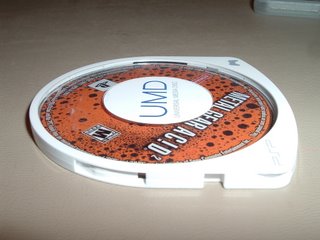
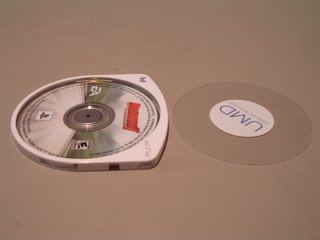
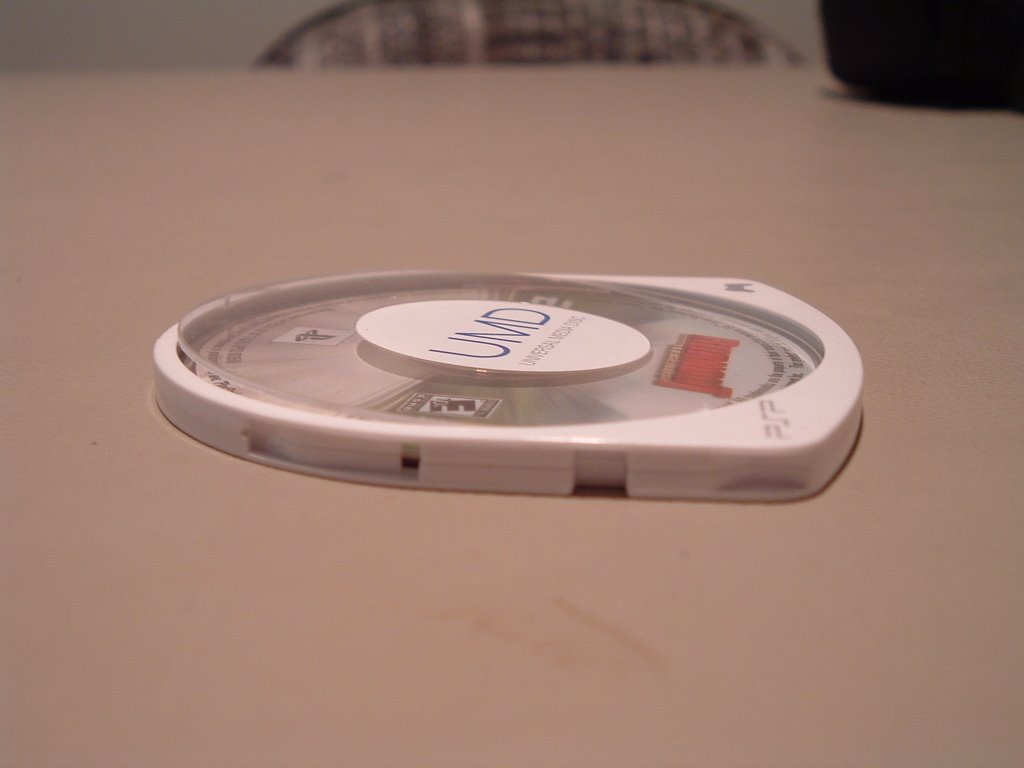
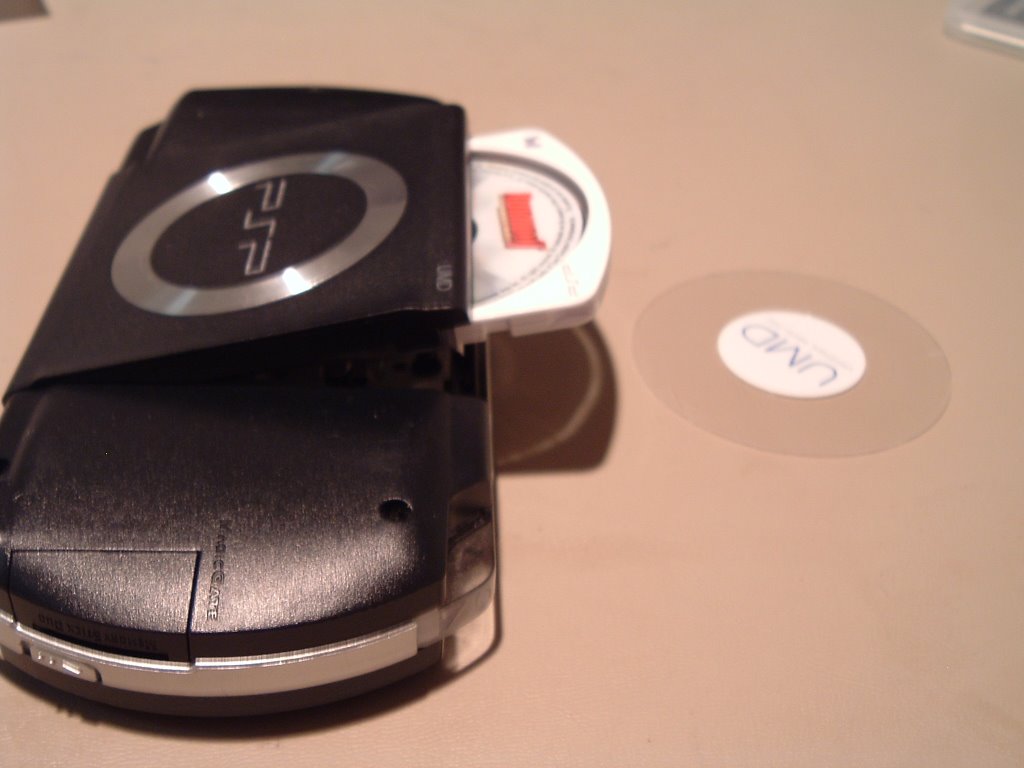
UMD shells are not rugged. Store too many UMDs in a space too small for them, such as the outside pocket of a PSP carrying case, and you're likely to find some of them damaged.

An undamaged UMD

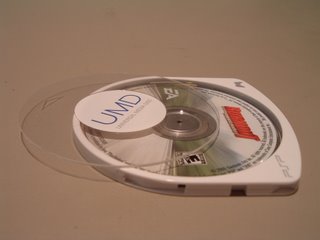
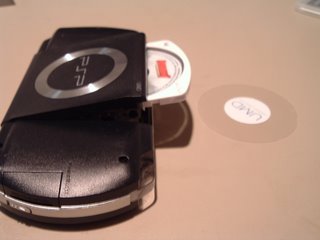
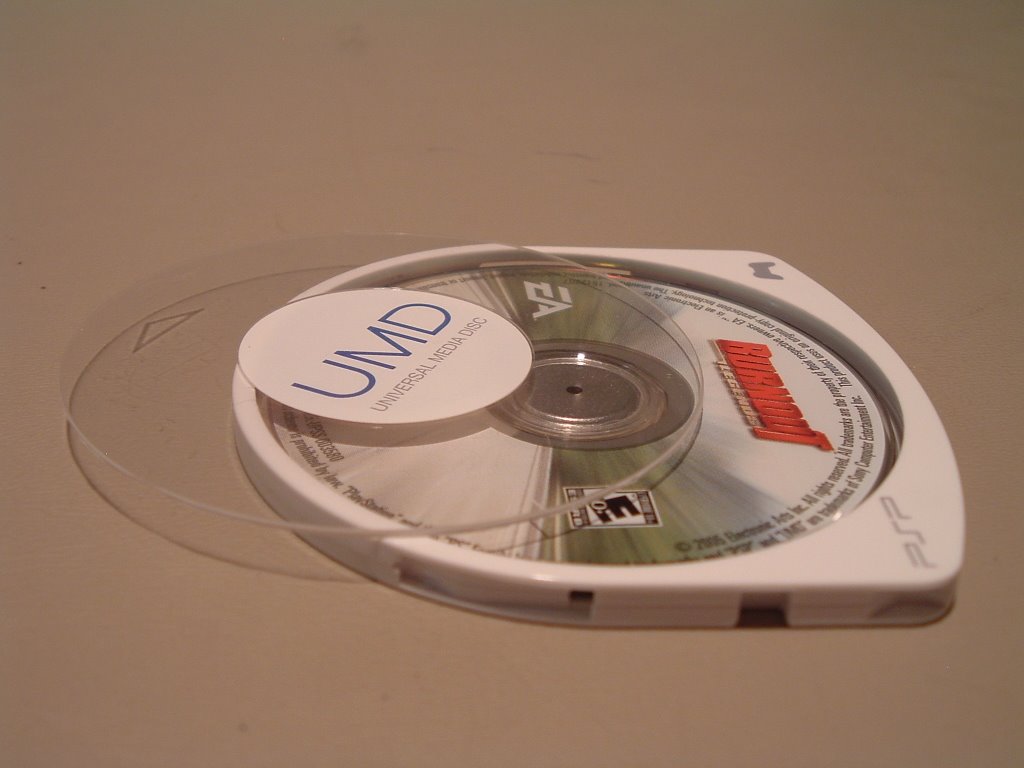
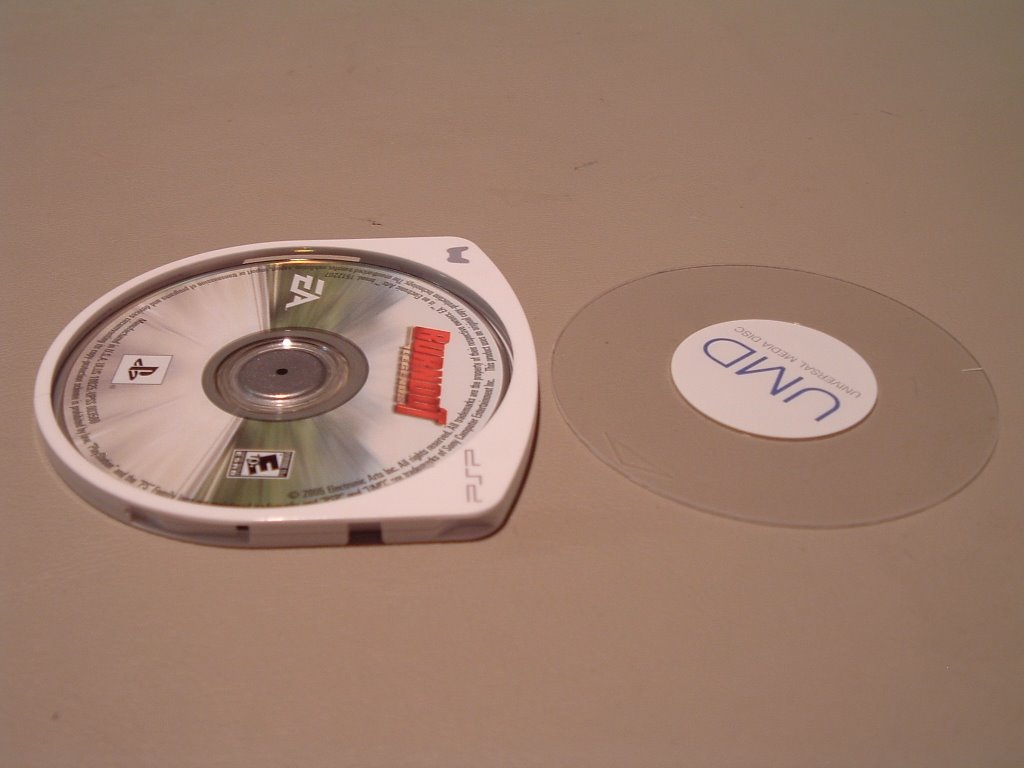
The most common damage type I found was separation of the window, which then falls into the interior of the shell. When the UMD is inserted into a PSP, the window jams against the data disk and keeps it from spinning.

A UMD with window separation

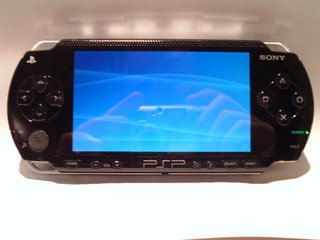
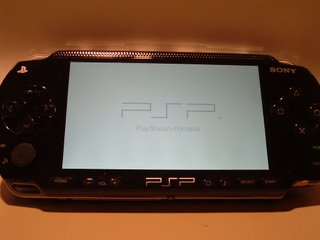
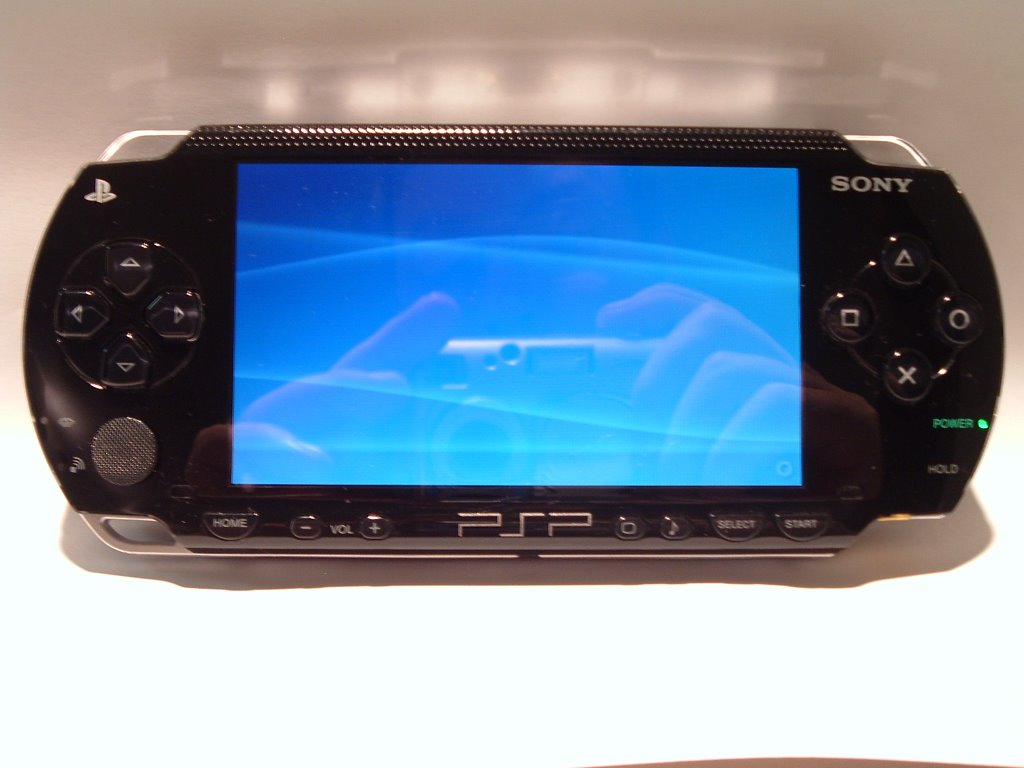
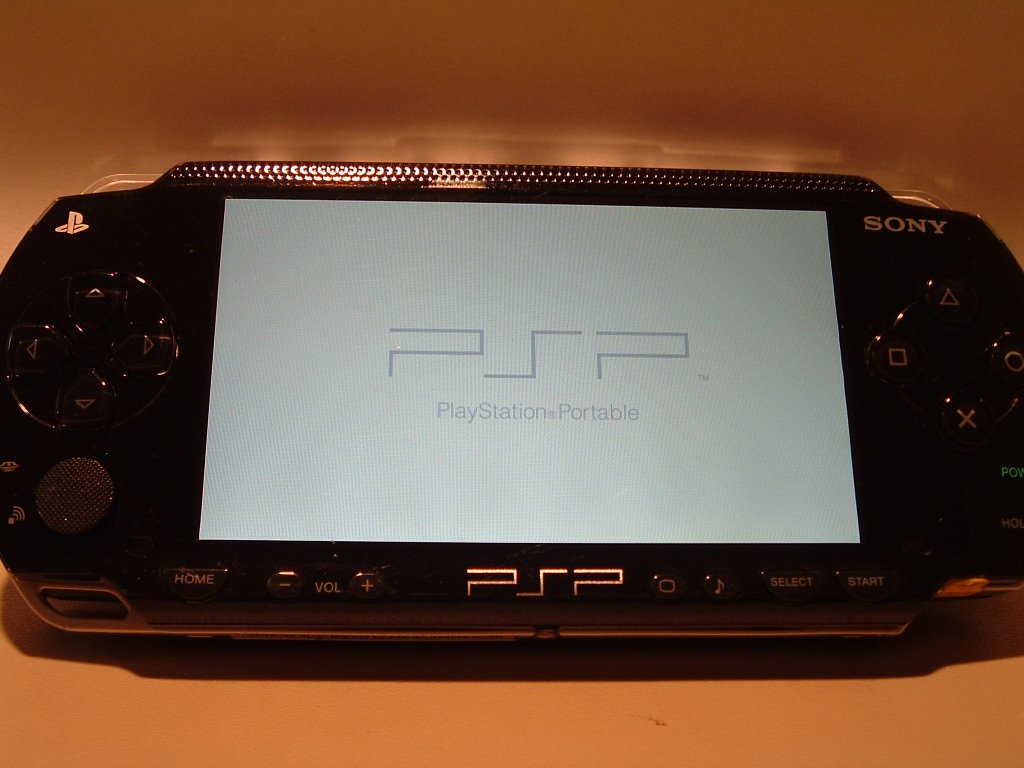
PSP not booting from damaged UMD

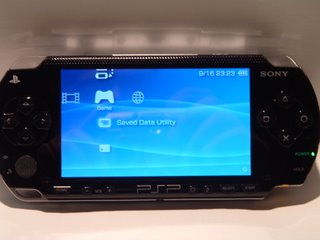
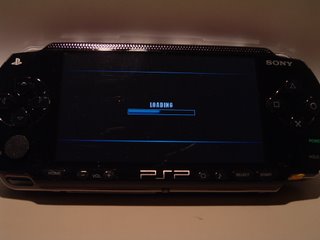
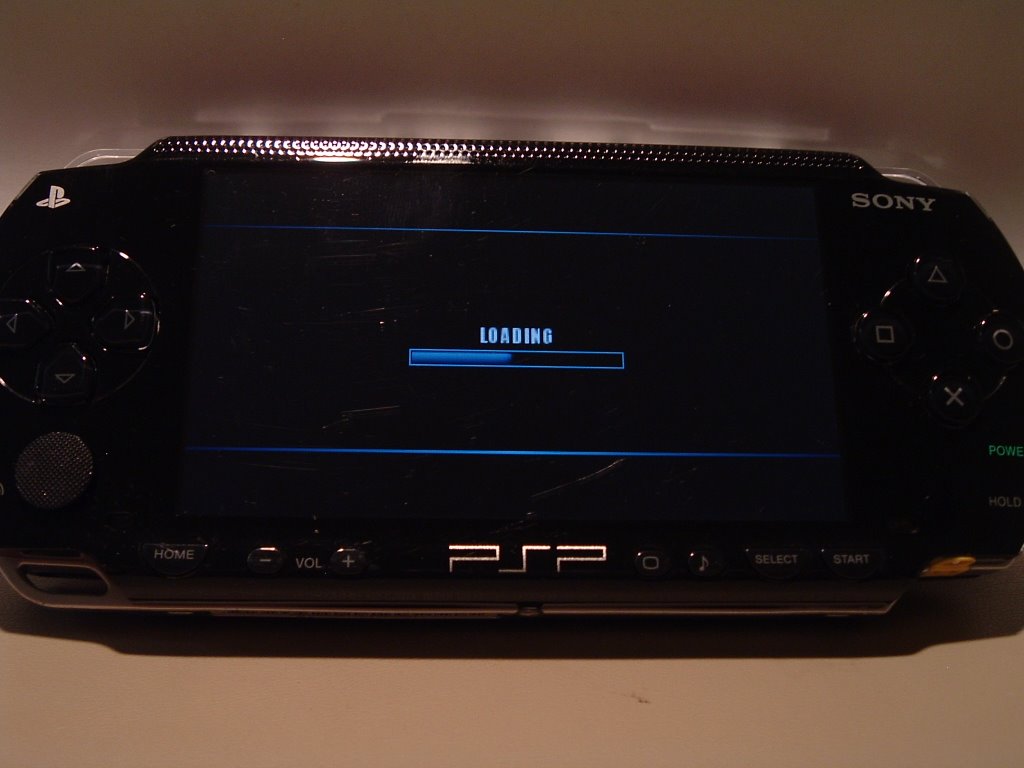
PSP not loading damaged UMD

Close-up on trying-to-load icon


I have spent a lot of time tryng to re-seat or partially re-seat the window, and searching the web for a source of UMD replacement shells. The first is an exercise in frustration, and Sony prevents the second. Apparently their position is that cracked UMDs are prima facie evidence of piracy, so they neither make replacements nor license the patents.

Then I had an idea inspired by a YouTube video. It worked beautifully. Here's my workaround:

That's it!

Monday, September 11, 2006

Further UPS Yours

When I called Microsoft on Tuesday August 29th, I was delighted to hear that my repaired Xbox 360 console had already been shipped. This meant that I would have it back by Friday, in time for the three-day Labor Day weekend. I got the tracking number, and checked the UPS site to see where the package was. Sure enough, it was on its way.

On Thursday evening, the tracking information showed that the package had arrived at the Phoenix distribution center. So surely I would have it the next day, right on schedule.

Or not.

I checked the tracking log a few times during the day Friday, but there were no updates. This wasn't that unusual; sometimes the out-for-delivery scan wouldn't happen, and the next item in the log would be the delivery. And the delivery attempt could be as late as 7PM (officially; on the previous shipment, I saw a couple of attempts around 7:30). So I went home at 5PM and called UPS.

I wanted to know if the package was at the UPS distribution facility. If it was, I could go down and pick it up, even after 6PM by going to the Will Call window. The customer service representative had no more information than what was in the tracking log, but promised I would get a call back within an hour from the distribution center to let me know where my package was.

An hour came and went, and there was no call. I waited until 7PM, then called UPS again. This time I was told it was too late for me to pick it up, even from Will Call, so I would have to wait until Tuesday for a delivery attempt. Sigh.

Having resigned myself to not having my toy until after the weekend, I asked them to hold it for me. I said I would come and pick it up Tuesday morning. I didn't want a repeat of the previous fiasco where it took a week and five alleged delivery attempts to get me my package. The customer service rep said that would be fine. Around 8 I got a call from the distribution center, asking me if it was correct that I wanted the package held. I said yes.

During the weekend, I saw in the tracking log that the package had been missed at the distribution center, and was scheduled for delivery the next business day. This gave me pause. Hadn't I asked them to hold it? But since the distribution center had called me back to make sure I wanted the package held, surely this time they'd hold it for me and it would be there when I went to pick it up on Tuesday.

Or not.

After fighting through traffic for 45 minutes on Tuesday morning, and waiting in line for 20 minutes behind other people who thought they'd beat the rush by showing up early, I got to the counter and asked for my package. Only to be told that it was on a truck that had already left.

Feeling much like Charlie Brown having once again fallen for Lucy Van Pelt's promise not to yank away the football at the last minute, I drove to work.

I checked the tracking log a couple more times during the day, and found that my parcel had been (finally) delivered to the apartment leasing office in the early afternoon. Surely it would be there when I got home from work.

And it was.

So UPS, at least here in Phoenix, is a delivery company that sometimes holds packages when it's supposed to deliver them, and sometimes delivers them when it's supposed to hold them.

So what can Brown do for me? I will leave that as an exercise for the reader, but here are some hints: it involves my posterior, and osculation.

Monday, August 21, 2006

UPS Yours!

In Xbox 360: Game Console Or Paperweight?, I wrote about how my console died, repairing it, and the hard lesson learned about service contracts for cutting-edge technology. This time I'm writing about another hard lesson, this one learned in the process of trying to get the console repaired.

Here's how an out-of-warranty Xbox 360 repair is supposed to work: The console owner calls Microsoft and pays for a repair with a credit card. Microsoft sends an empty box to the owner via UPS. The owner packs the Xbox 360 in the box and sends it back to Microsoft. After fixing it, Microsoft ships it back to the customer again.

Here's how it has actually worked, so far: I called Microsoft on the 8th and made a repair order. The good news is that as part of the repair price, Microsoft will pick up the shipping costs both ways. The bad news is that it via be three business days each way for shipping and something like five business days for the repair. So I resign myself to waiting a couple of weeks until I can get my working console back.

Tuesday the 15th comes, and the good news is, surely the shipping box will be delivered by today. The bad news is that it isn't. I get home around 6:30PM from shopping and there is neither a delivery notice on my door nor the blue card in my mailbox that means the package has been left at the apartment complex's leasing office. I call Microsoft, and the customer service representative gives me the UPS tracking number. I look it up on the UPS website, and the good news is that the package was shipped and has arrived in Phoenix. The bad news is that both times when delivery was attempted, I wasn't home and the carrier didn't leave a delivery notice. The good news here is that the regular UPS delivery guy, Dave, frequently delivers stuff I order online, and knows to leave packages at the apartment leasing office before 6PM. The bad news is that this can't possibly be him; the second delivery attempt was around 5:30PM.

So I call UPS and ask item to inform the driver that the package needs to be left at the apartment leasing office before 6PM. The good news is that UPS agrees to do this and text indicating an exception appears in the tracking log. The bad news is that on Wednesday the 16th the package is again not delivered, and again there's no delivery notice. The log indicates that delivery was attempted shortly after 7PM. I was home the entire evening, and my doorbell never rang. So perhaps he tried to deliver it directly to the leasing office as I requested...but after 6PM, which I'd indicated was too late. He certainly never attempted to deliver it directly to me.

I again call UPS to complain, and ask them to make sure the driver knows that the package must be delivered before 6PM, and to the leasing office. I know that the next day I'm definitely not going to be there to get it. The good news is that UPS agrees to inform the driver, and I make sure he can't miss it by taping a note to the outside of my door. The bad news is that of course he does somehow miss it, and again on Thursday the 17th delivery is attempted after 7PM and no notice is left.

I call UPS one more time, and since the log indicates that the package will be held at the local UPS office for pickup, I get the address from the customer service representative and change my Friday plans so I can be at their office before 6PM when they close. The good news is that I'll definitely be able to get the package, finally. The bad news is that I have to rearrange my schedule.

It's a good thing, though, that I check the tracking log one more time Friday afternoon; the good news is that the package was delivered at 1:30PM.

Dave's back!

Tuesday, August 08, 2006

Xbox 360: Game Console Or Paperweight?

Yesterday my Xbox 360 died, quietly and without warning. One moment it was playing a DVD for my cat, and the next it was frozen. Rebooting resulted in a freeze partway through the boot logo, and then the dreaded three red segments flashed around the power button.

I performed all the steps listed in the troubleshooting guide at Microsoft's website. Still I got the red lights, the dread lights, the your-box-is-dead-lights.

I've had the box for six months, so it's no longer covered by the default 90-day warranty. I had had very few problems in that time, and thought I was past any manufacturing defects.

Usually I don't buy extended warranties, because I baby my equipment and manufacturing defects show up in the first day or two of use. So my stuff either fails right away or keeps working until it wears out. So I didn't buy one this time either. Just to make sure, I had left the machine running for an entire weekend shortly after I got it, and had no freezes. So I thought I was safe.

I was wrong. What I failed to consider was that the initial manufacturing runs of a new product are often the most trouble-prone, and not all defects show up in the first few days of use.

Now I'm out the cost of repair, which is double the cost of a two-year service contract. Make that triple since I'm going to buy the contract when I get the machine back.

Moral of the story: Service contracts are usually a waste of money...but not always.

My Life As a Gamer Part 4: Reconstruction

After the Recent Unpleasantness in mid-2003, rebuilding of everything began, including my collection of games and gaming hardware.

With the aid of a new job and steady income, my library passed its former size sometime in 2005. So now it's all about new titles and next-gen systems, old titles that are new to me, completing collections of game series, and my first tentative steps into mutliplayer and online gaming.

And actually finishing some of the games!

I'm still adding to my library, of course, but as I have enough games to play for years, I'm being far more selective. For me to consider acquiring it, a game has to be one that I would be interested in anyway, and pass one of the following four tests:
  • Does it help complete a game series I like and already own one or more from it, such as Prince of Persia or Wing Commander?
  • Does it score 90% or better on gamerankings.com?
  • Has it been recommended to me by someone I trust for reasons I agree with?
  • Is it a game I need in order to play online or multiplayer with a friend?
Titles I've enjoyed during these years include Silent Hill 3 and 4, the first three titles in the Myst series, Max Payne, Halo, Starlancer, Freelancer, Tomb Raider and Tomb Raider Legend, Starfleet Command III, TIE Fighter, Fury3, Babylon 5 I've Found Her: Danger and Opportunity, Armagetron, Grim Fandango, Final Fantasy VII and X, Painkiller, Frozen Bubble, Bejewelled 2, Black Knight, Golden Sun, Burnout Takedown and Revenge, Burnout Legends, all three Fatal Frames, Wipeout 3 and Pure, Katamari Damacy, Dragon Quest 8, Need for Speed Most Wanted, Prince of Persia: The Sands of Time, Battlestar Galactica, Crimson Skies: High Road to Revenge, Mercury, Stubbs the Zombie, Half-Life 2, Black, EVE Online, Medal of Honor Frontline, Shadow of the Colossus, Jet Set Radio Future, SSX 3, the Marathon series, Metal Gear Acid, Ridge Racer PSP, Prey, Ninja Gaiden, Nintendogs, Guitar Hero, Forza Motorsport, and Killzone.

Those who say there are no good games out there are deluded; I think the ratio of dreck to worthwhile titles remains about the same (90%/10%), but the volume of titles has increased dramatically in recent years. Clearly, given that the above list isn't complete, I'd say there's plenty out there worth playing.

That brings us to the present, the start of this blog, and the end of this post.

My Life As a Gamer Part 3: After Us, The Deluge

By 1997 Commodore was no more, and it was plain that the Amiga's days were numbered. Additionally, I'd married a PC user who also owned a Playstation, and picked up her old PC when she got a new one. So the Amiga gathered dust while I played X-Wing and Wipeout and Duke Nukem 3D. Real Life concerns ate up my gaming time, and the Amiga moved from the house to the garage and finally to the trash.

Technically this was not a violation of my oath, as by this time the Intel processors had moved to a less-brain-dead architecture, and something close to a real operating system had come from Microsoft (Windows 95). Still, I punished myself by feeling bad about it. Honest!

During this era, which lasted until 2003, I steadily accumulated PC and PS1 titles, and PS2 and Xbox titles after we acquired those platforms.

Memorably enjoyable titles from this era include (in addition to the ones already mentioned): Dark Forces, Jedi Knight, Colony Wars, Rainbow Six, Half-Life, Silent Hill, Wipeout 3, Aliens vs. Predator, Star Trek DS9: The Fallen, Gunman Chronicles, Fear Effect 2, Gran Turismo 3, Ico, Ace Combat 4, Ghost Recon, Jedi Outcast, Star Trek Elite Force, and Silent Hill 2.

In 2003 came Divorce, and among other things washed away in the Deluge was my entire game collection. And that bring us to the last era: Reconstruction.

My Life As a Gamer Part 2: The PC Years

With 1981 came college and the continuation of TRS-80 gaming. It also saw the introduction of the IBM PC, a machine I was utterly uninterested in, for esoteric programming-related reasons. Having dealt with CP/M86, I had sworn an oath never to own a machine primarily based on Intel's brain-damaged segmented architecture. This oath I kept until 1997.

There weren't a lot of games for the TRS-80, but in combination with trips to the arcades there were enough to keep the gaming spark alive through around 1990 or so. Most were ports of arcade games, including surprisingly good (considering the 128x48 resolution graphics) versions of Defender, Galaxian and Pac-Man. There were also occasional original games like the hilarious and fun Outhouse. And there were text adventures from Adventure International and later Infocom.

By 1990 I'd been working for a major IT firm for four years and could afford a new PC (dont beat me up over the ''microcomputer vs. PC" distinction; that battle was lost long ago). I stuck to my oath and bought a Commodore Amiga. It was easy. At the time, the PC wars had not yet been decided, and in every technical respect the Amiga was superior to an Intel-based PC running Windows 3.0. It was also superior in some suspects to a Mac, and was considerably cheaper.

And of course it had better games.

These ranged from the unwieldy ArcticFox, Barbarian, Defender of the Crown, Dungeon Master, Falcon, Jet, Pac-Mania, Red Baron, SDI, Space Quest, and Their Finest Hour: Battle of Britain, to the middling Emerald Mine, F-19 Stealth Fighter, Ferrari Formula One, Great Giana Sisters, Gunship 2000, Knights of the Sky, Outrun, Plutos, Silent Service, and StarGlider 2, to the excellent A-10 Tank Killer, Arkanoids, F-16 Combat Pilot, F/A-18 Interceptor, Fighter Duel Pro, Frontier Elite II, Indianapolis 500, Lemmings, Marble Madness, Star Wars, Super Hang-On, Test Drive 2, Turrican, and Wing Commander.

All this kept me in gaming goodness until 1997. My trips to the arcades dropped off drastically; those shallow coin-eating game designs couldn't compete with the hours of enjoyment in titles like Wing Commander, A-10 Tank Killer, or Frontier Elite II. Nor could the Nintendos or Segas, which I perceived as arcade rip-offs. I was unaware of superior titles like Metroid or Final Fantasy.

Then, in 1997, I got married, and the PC-only phase of my gaming life ended. And the next began: After Us, The Deluge.